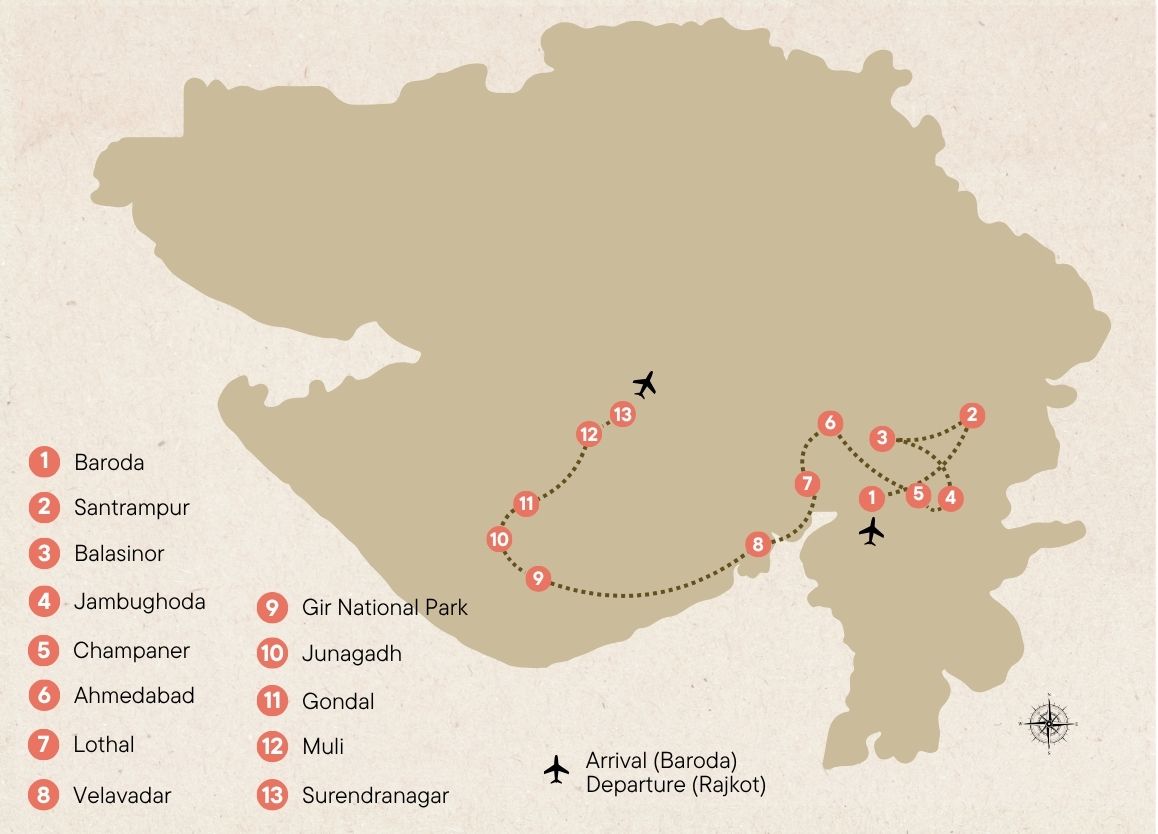
Pehle Gujarat Dekho

The Best of Gujarat: Palaces, Temples, Textiles & Wildlife

This journey explores Gujarat’s magnificent princely heritage, tracing the legacy of the royal dynasties that shaped the region’s cultural landscape. From opulent palaces and architectural marvels to wildlife sanctuaries established by visionary rulers, you’ll experience the enduring impact of Gujarat’s princely states. This itinerary showcases how royal patronage has helped preserve ancient crafts, establish conservation traditions, and create distinctive cultural identities that continue to thrive in modern Gujarat.
Day 1: Arrival in Vadodara
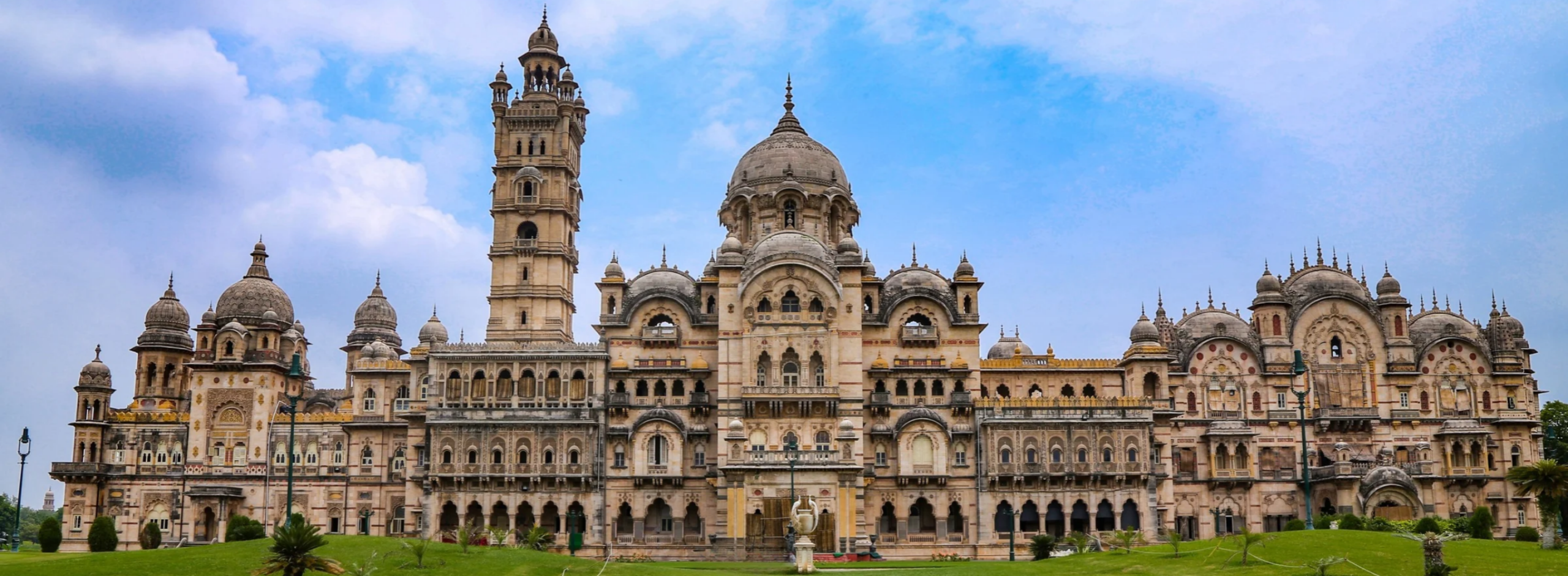
Vadodara, formerly known as Baroda, flourished under the progressive Gaekwad dynasty, which transformed it into Gujarat’s cultural capital. The city became a centre for education, arts, and innovative governance under Maharaja Sayajirao Gaekwad III, who invited scholars and artists from across India and Europe to enhance its cultural landscape. Beyond its renowned palaces and museums, Baroda’s legacy as a princely state that championed modernity while preserving tradition continues to shape its unique character.
Overnight: Vadodara City.
The Gaekwad rulers were among the most progressive and wealthy of India’s princely states, ranking high in the British hierarchy with a 21-gun salute status, and their patronage of the arts created a cultural renaissance that continues to influence the region today through institutions such as the Maharaja Sayajirao University of Vadodara, the Baroda Museum and Picture Gallery.
Their breathtaking Lukshmi Vilas Palace showcases stunning architecture together with elaborate interiors boasting beautiful décor, mosaics and chandeliers. The Maharaja Fateh Singh Museum houses a remarkable collection of Raja Ravi Varma paintings—more than 30 original works by the master who revolutionised Indian portraiture. The former residence of a Baroda state Diwan (1849–1854), Tambekar Wada, showcases some of the finest murals from colonial Gujarat. Its wooden surfaces feature vivid frescoes depicting Hindu gods and themes, religious rituals, and European soldiers. The walls of the Wada share glorious stories of the bravehearts, such as the 1802 battle between Maratha-allied forces and the Arabs.
Overnight: Baroda City.
The royal family still resides at the Garden Palace in Balasinor, where for over five decades they have dedicated themselves to preserving the discovery of one of India’s most remarkable natural treasures, the third-largest dinosaur hatchery and fossil site on the planet, dating back over 65 million years. Through their efforts, they have transformed this site into a world-renowned paleontological site. A 25,000 square foot Dinosaur Museum and Fossil Park, where immersive galleries and life-sized 3D recreations transport visitors back 65 million years. The star attraction is the Rajasaurus narmadensis, or “King of Narmada”—a fearsome carnivore with a distinctive crested horn related to the Tyrannosaurus Rex family. The royal family’s stewardship represents a unique convergence of princely heritage and scientific discovery, preserving one of India’s oldest paleontological treasures while making it accessible to researchers and visitors alike.
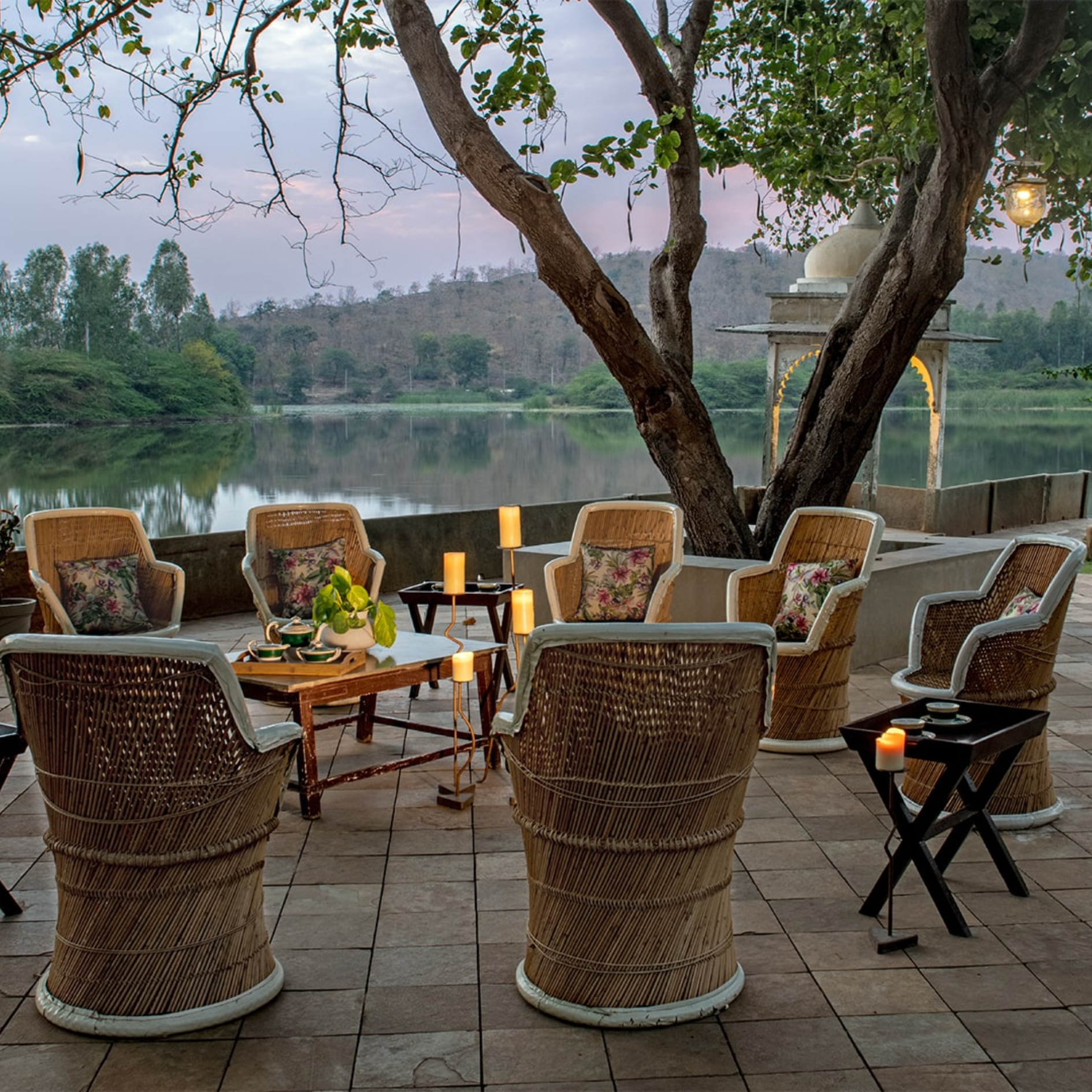
Santrampur, nestled in the Aravalli Hills, was a princely state ruled by the Parmar Rajput dynasty, which established a progressive legacy. The lakeside Shri Joraver Vilas (1926) was built in the Art Deco era with interiors that create an allure of old-world charm. The royal family’s ‘Santrampur Fields and Flowers’ initiative produces organic teas, jams, sherbets, chutneys, and flour using local ingredients, showcasing the region’s agricultural and forest traditions while also reviving historical crafts like traditional Chintz textile patterns.
Overnight: Mahisagar Dist, Central Gujarat Region.
The royal family has transformed their ancestral property at Jambughoda into a nature-lover’s retreat surrounded by forests and tribal villages, but preserving it was a hard-fought battle.
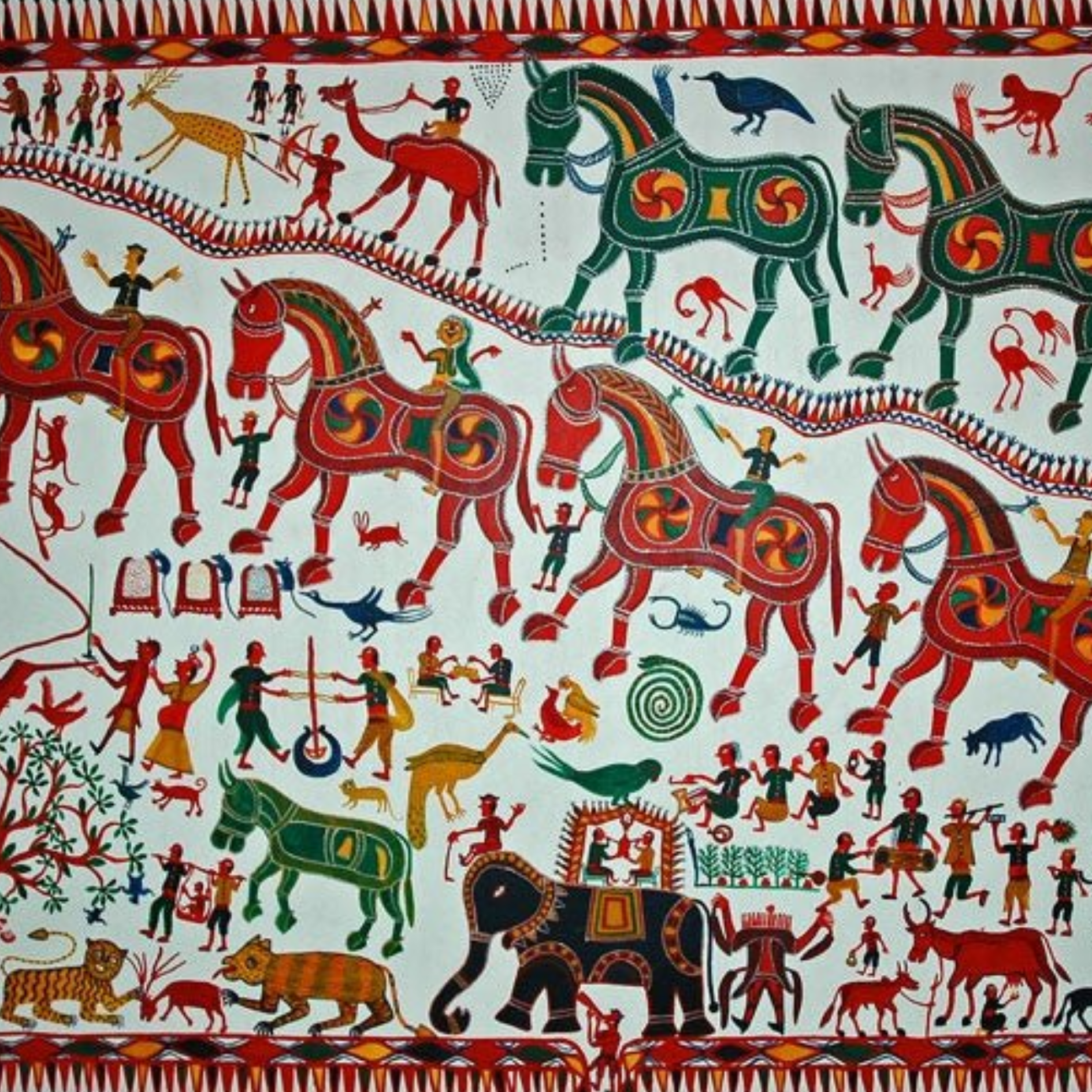
As industrialisation threatened Gujarat’s forests, the Jambughoda royal family urged the government to protect Jambughoda’s natural heritage. Today, the 130-square-kilometre former royal forest has sanctuary status. Today, this sanctuary protects 43 leopards, antelopes, sloth bears, and numerous indigenous species. Jambughoda was a small yet culturally significant princely state where the rulers also cultivated deep connections with the local communities, and today, traditional Rathwa tribals offer glimpses of their vibrant Pithora paintings, sacred artwork that depicts mythological scenes and tribal life.
Overnight: Panchmahal Dist, Central Gujarat Region.
The Jambughoda Wildlife Sanctuary has rich flora, including Teak, bamboo, and Mahudo amongst other indigenous trees. It is also home to the panther, the four-horned antelope, the blue bull, the hyena, the jackal, the wild boar, and the sloth bear. There are 25 tribal villages in and around the sanctuary, which provide an insight into how these communities co-exist with India’s natural heritage.
The Bhasha Academy is a must-visit, one-of-a-kind museum dedicated to preserving the voices of India’s indigenous communities, their languages, music, instruments, belief systems, and culture.
Overnight: Panchmahal Dist, Central Gujarat Region.
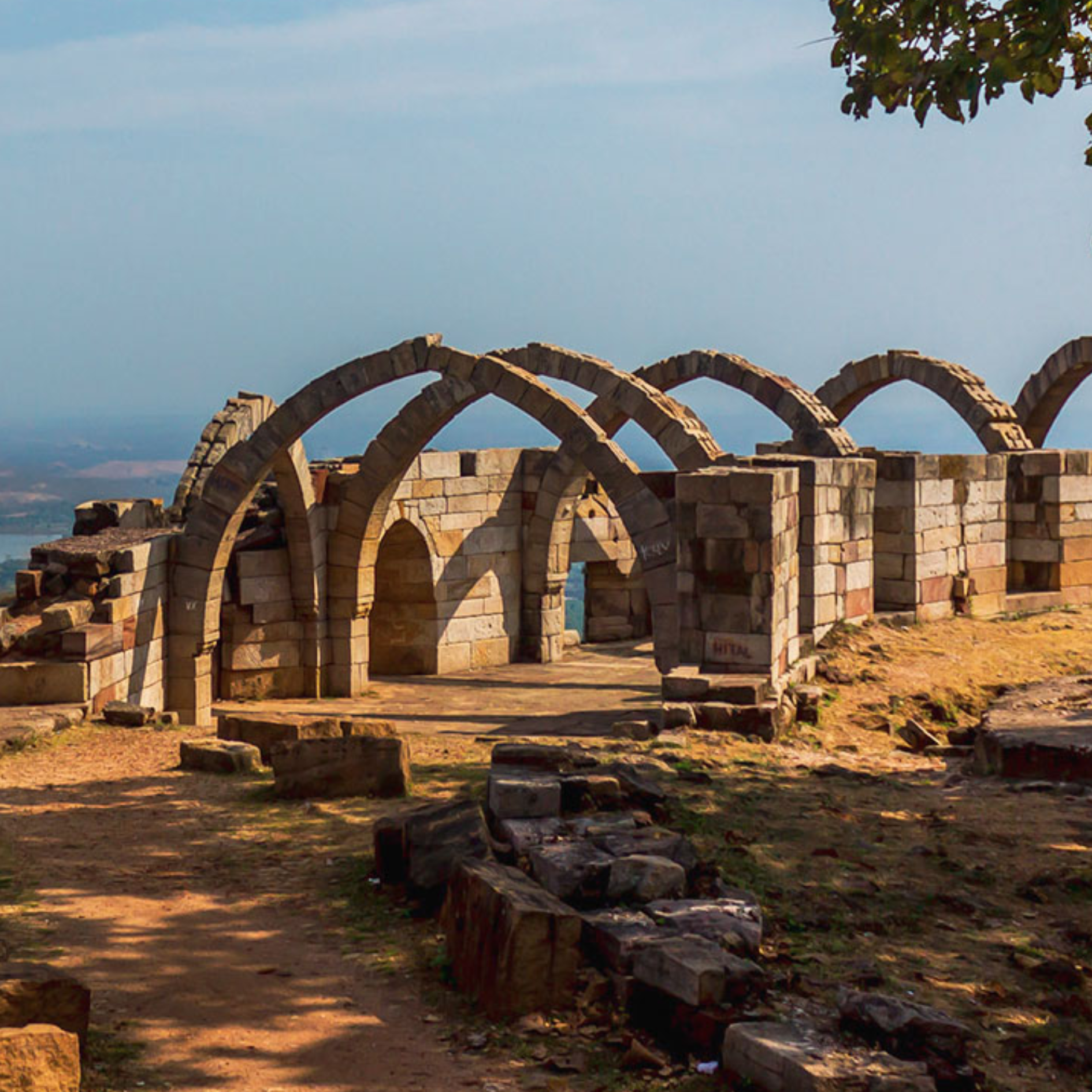
The astonishing Champaner-Pavagadh Archaeological Park, a UNESCO World Heritage site, stands as the only complete, unchanged Islamic pre-Mughal city in India. This remarkable park showcases diverse heritage elements against a dramatic landscape dominated by the 800-metre Pavagadh Hill. Pavagadh Hill has remarkably preserved the 14th-century Hindu hill-fortress and the 15th-century Islamic capital, with its mosques, monuments, and intricate water systems, within this living museum.
Continue to Ahmedabad, India’s first UNESCO World Heritage City, where centuries of cross-cultural exchange have created a unique architectural and cultural landscape.
Overnight: Ahmedabad City.
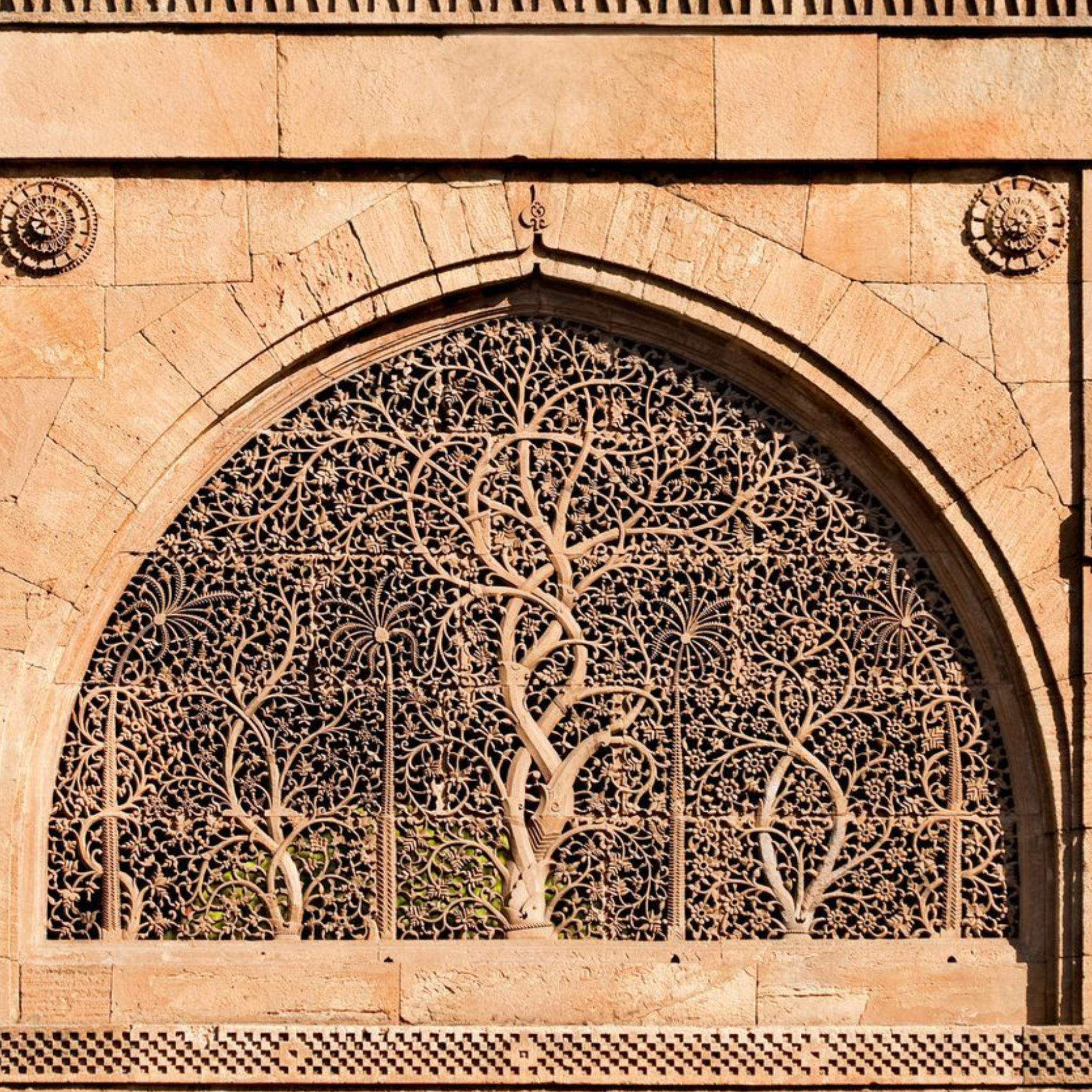
Exploration of Ahmedabad’s extraordinary architectural heritage begins with the old city’s ‘pols’—traditional neighbourhoods featuring elaborate wooden havelis, secret passages, and community gathering spaces. Though not a princely state capital, Ahmedabad’s prosperous merchant families and political leaders established royal-like patronage systems that funded elaborate architectural projects and cultural institutions. The renowned textile museums showcase centuries of Gujarat’s fabric innovations, from intricate embroidery to block printing techniques that influenced global textile traditions. The city’s famous culinary heritage comes alive with a traditional Gujarati thali dinner at the acclaimed The House of MG, offering distinctive vegetarian dishes served on silver platters in an exquisitely restored heritage building.
Overnight: Ahmedabad City.
The ancient Indus Valley port city of Lothal, whose 4,500-year-old man-made dock once connected this sophisticated urban centre to trade networks stretching to Mesopotamia and beyond, is an architectural marvel representing one of the world’s earliest examples of urban planning and governance.
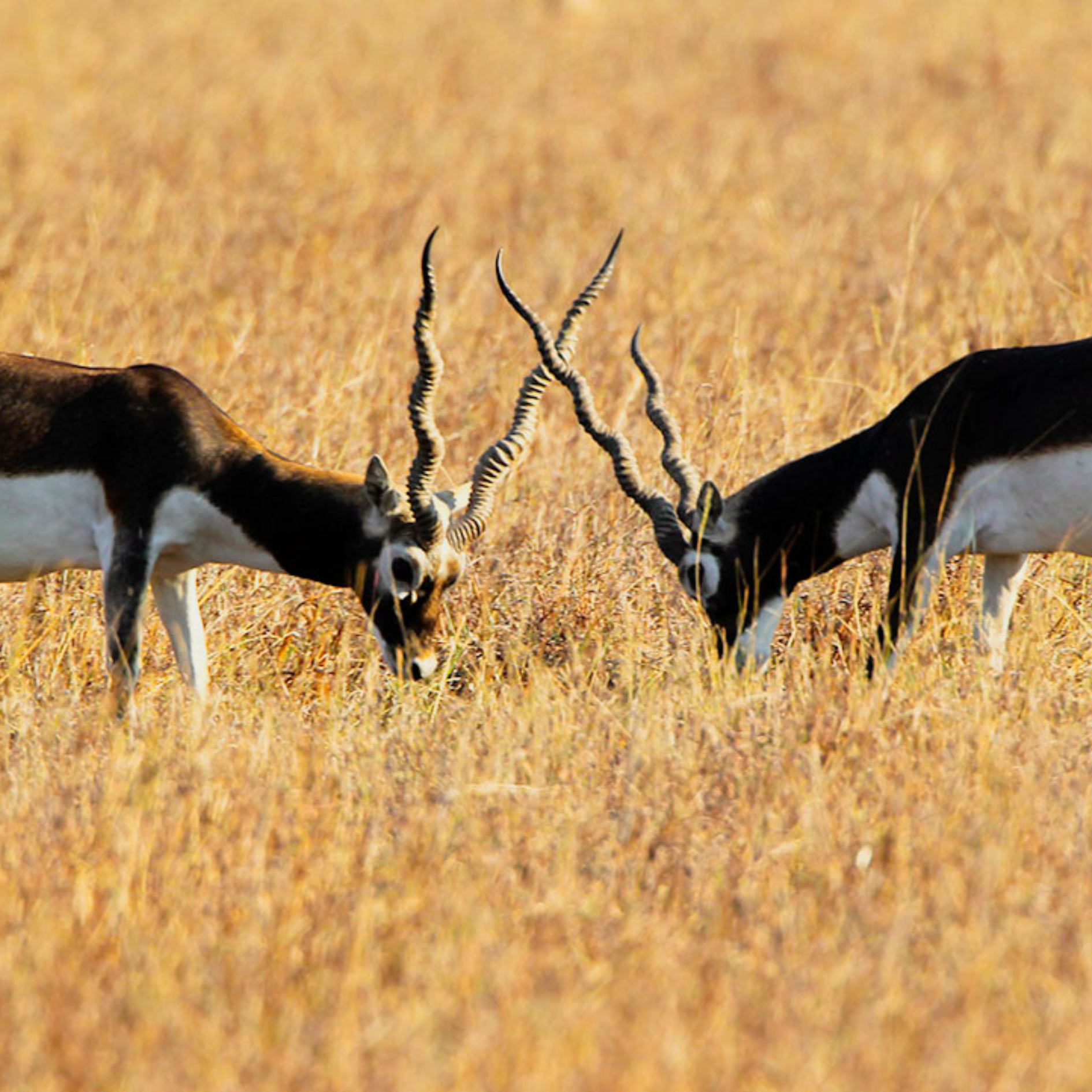
Velavadar National Park was the former private reserve of the Bhavnagar royal family, who protected these pristine grasslands when they were private hunting grounds, inadvertently preserving a unique ecosystem that has now become one of India’s most important blackbuck conservation areas. Their environmental stewardship, though initially focused on hunting, created the foundation for modern conservation efforts that protect the region’s once-endangered blackbuck and are now also home to the wolves, the striped hyena, the jungle cat and the desert fox, amongst others.
Overnight: Bhavnagar Dist, Gohilwar Region, Saurashtra.
The Gohil dynasty ruled this coastal state for centuries and was instrumental in implementing progressive policies and supporting the local arts. The town today includes several notable sites: Victoria Park, one of India’s oldest man-made forests located in the city centre; Barton Library, Gujarat’s oldest library housing an impressive collection of books, manuscripts and rare coins; the marble Ganga Deri monument; and the architecturally significant Darbari Kothar state granary.
Dared is a small yet extraordinary village as it showcases a variety of Gujarat’s remarkable artisanal heritage. The Darbargadh is a meticulously restored 700-year-old ancestral home of the erstwhile royal family. Discover how one village has preserved extraordinary craftsmanship. Dared has a remarkable collection of artisans from diamond polishers working with precision, goldsmiths crafting unique jewellery, a terracotta potter shaping clay, an award-winning creator of transport jugaad (ingenious vehicle modifications) and even a priest who makes mithai (sweets) following traditional village recipes. Visit Sihor to explore Darbargadh, which has exquisite fresco paintings created using tempera techniques around 1790 and intricate wooden architecture once supported by the Gohil dynasty. Meet skilled metalwork artisans creating beautiful objects from brass, copper, and kansa (copper-tin alloy), whose ancestors crafted pieces for the royal household. Heading out by Jeep for a sundowner experience set against the backdrop of rural Saurashtra’s golden landscape.
Overnight: Bhavnagar Dist, Gohilwar Region, Saurashtra.
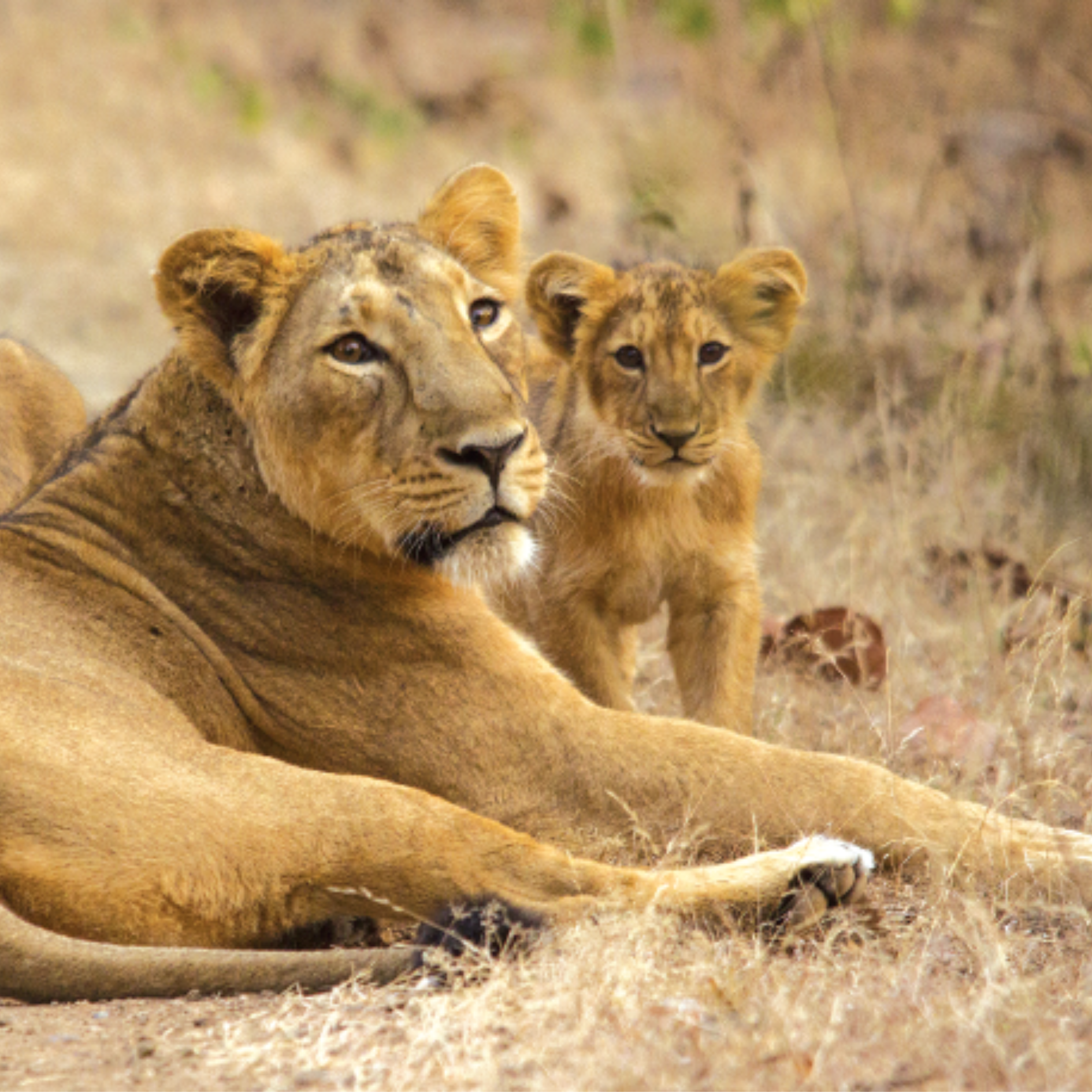
The Gir National Park stands as the last wild refuge for the Asiatic Lion. Nawab Sir Muhammad Mahabat Khan III banned lion hunting in 1911, transforming royal hunting grounds into a protected sanctuary. This decisive action saved these magnificent cats from extinction, with numbers growing from barely 20 in 1975 to nearly 891 today. These lions—smaller and paler than their African relatives—inhabit the park’s rugged terrain alongside leopards, jungle cats, and numerous other endemic species. Gir remains Asia’s only habitat for the wild Asiatic lions and one of the continent’s most important protected areas for biodiversity. The afternoon safari provides your first opportunity to explore these dense forests while searching for these remarkable predators in their natural environment.
Overnight: Gir National Park, Sorath Region, Saurashtra.
Morning and afternoon safaris into different zones of the Gir National Park maximise the chances of encountering the Asiatic lion. Between safaris, insights into the surrounding communities include the Maldhari pastoralists, who live in scattered settlements called nesses, and the Siddis, believed to have African origins, known for their vibrant athletic dance traditions that preserve their unique cultural heritage.
Overnight: Gir National Park, Sorath Region, Saurashtra.
The ancient Buddhist caves and impressive Uparkot Fort in Junagadh showcase layers of history from multiple ruling dynasties. The Junagadh state, governed by the Babi dynasty from 1748 until India’s independence, left an impressive architectural and cultural legacy throughout the region.
The coastal Somnath Temple stands as one of India’s most significant pilgrimage sites and a marvel of Hindu architecture. This Jyotirlinga dedicated to Lord Shiva has been destroyed and rebuilt seven times throughout history—most recently reconstructed in 1951.
Gondal is renowned for its progressive rulers of the Jadeja Rajput dynasty who prioritised education and infrastructure development, establishing schools, libraries and healthcare facilities that continue to serve the community today. It was among the first of the princely states to introduce free education for girls and public health initiatives. Accommodation at the Orchard Palace is filled with European furniture, Belgian chandeliers, and antiques. The Navlakha Palace Museum houses the royal family’s extraordinary collection of vintage cars, silver crafts, and eclectic collections! The sound and light show at Shri Swaminarayan Mandir is a must.
Overnight: Rajkot Dist, Halar Region, Saurashtra.
The former princely state of Surendranagar offers a window into the architectural and artisanal heritage of this region of Gujarat. The ruling family donated land for the temple’s construction and continues to support local artisans through patronage programs, craft exhibitions, and skill development initiatives that help preserve these centuries-old traditions for future generations. Their initiatives provide scholarships for young artisans to master traditional techniques while adapting to contemporary markets.
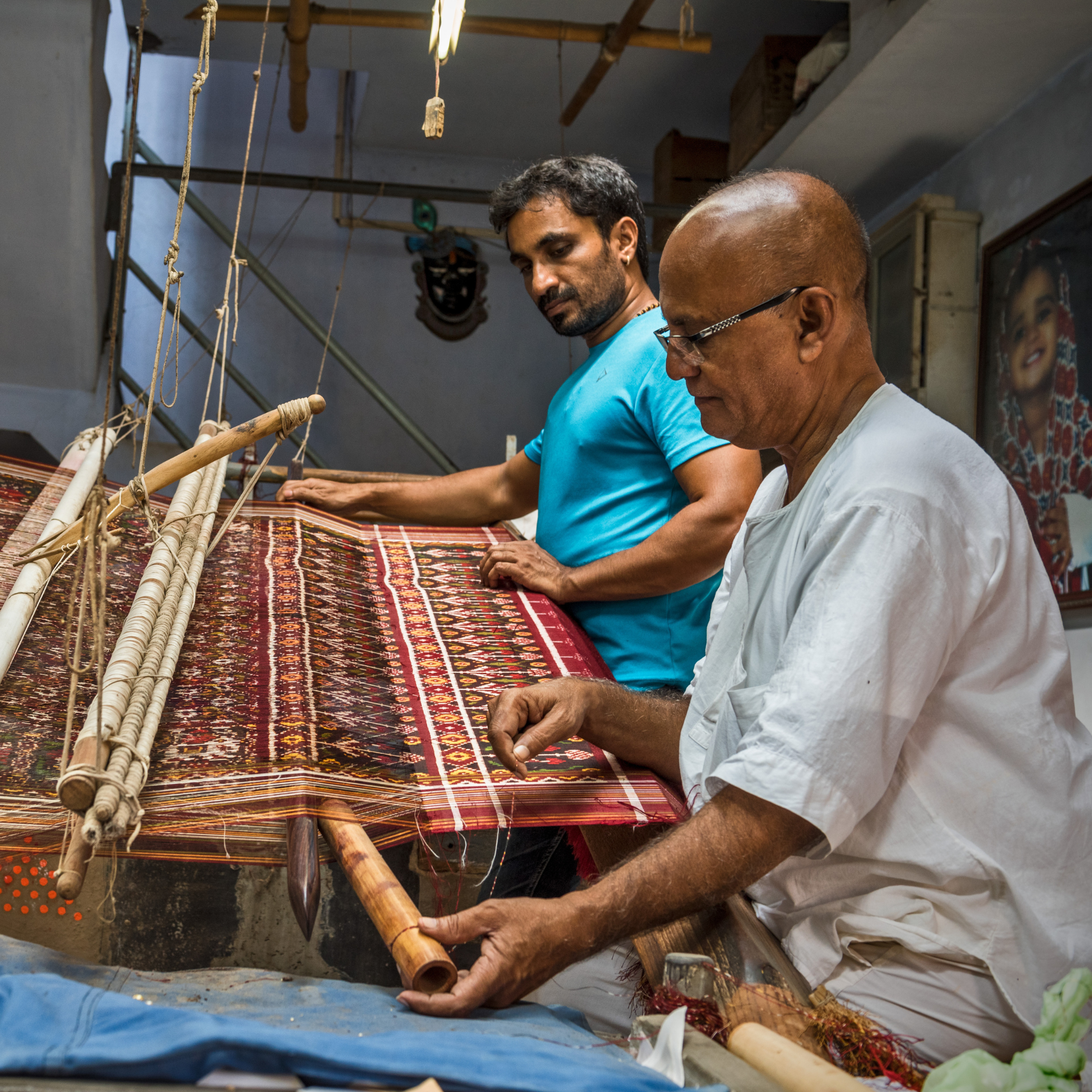
Explore the Mandavraiji Sun Temple, the world’s second-oldest Swaminarayan Temple with its wooden haveli and museum, the Jhombai Ma Temple with War Memorial, and the ancestral Raatba-ni-vav stepwell. Or, take in some of the region’s craft traditions, which are equally impressive. Master artisans practice the thousand-year-old Patola weave—one of textile art’s most complex techniques, where both warp and weft threads are tie-dyed before weaving to create precisely patterned silk masterpieces. Traditional Tangalia weaving, a 700-year-old indigenous craft native to this region, continues to thrive in local villages.
Overnight: Surendranagar Dist, Jhalawar Region, Saurashtra.
The “Cotton Story” experience traces the journey from farm to fabric through traditional cultivation, spinning, and weaving demonstrations that reveal centuries-old techniques still practised today.
The unique cheese-making process practised by the semi-nomadic Maldhari community transforms sheep and goat milk into distinctive dairy products using techniques passed down through countless generations of pastoral life, but today, it is being given a modern twist! The tour concludes with a special farewell dinner at the Central Palace Courtyard of the Ambika Nivas Palace, featuring Kathiawari cuisine and highlighting the culinary traditions that developed in royal kitchens across the region.
Overnight: Surendranagar Dist, Jhalawar Region, Saurashtra.
After breakfast, transfer to Rajkot International Airport concludes this extraordinary exploration of Gujarat’s royal heritage, living traditions, and warm hospitality.

More Itineraries

Architectural & Cultural Heritage

The world’s most complete archaeological journey, where dinosaur hatcheries, ancient trade ports, UNESCO wonders, and living heritage converge.

Natural Heritage

A celebration of conservation success for the world’s rarest species.

Living Heritage

A Journey through Ancient Wisdom and Living Heritage.